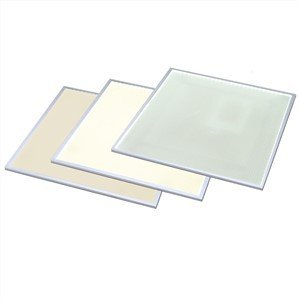
With the progress of society and the improvement of consumption level, commercial activities are no longer simple shopping. Consumers pay more attention to whether the experience is comfortable. The different space atmosphere presented by the lighting design of the store will bring consumers different visual feelings.
In the actual lighting application scene, the lighting fidelity RF and saturation RG will directly affect the visual sense.
If the LED light source has reasonable natural saturation and color fidelity, it can more clearly present the logo image and the color of goods, especially increase the brightness of goods and improve the "beauty" of goods, so as to attract the attention of consumers. On the contrary, it can not achieve the ideal lighting effect, which makes the goods look dull and lifeless, and then makes consumers lose interest.
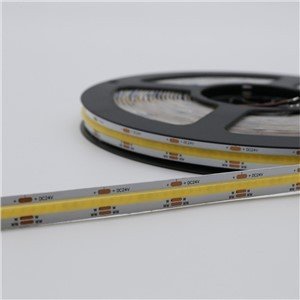
Therefore, in order to meet the higher needs of customers for store light quality, LED light source manufacturers also have higher pursuit for color rendering index CRI, R9, color fidelity RF and color saturation RG This kind of high-quality LED light source products are widely used not only in lighting lamps, but also in light box identification light sources.
Excellent lighting quality should include the following six key elements:
(1) Full spectrum (low blue) led light source
(2) Color rendering index CRI / RA
(3) Fidelity RF, saturation RG
(4) Color temperature consistency
(5) Illuminance and brightness (principle of proportion between basic lighting and key lighting)
(6) Anti glare grade of lamps
Fidelity RF and saturation RG are rarely used, mainly because these two indicators are not implemented in our current standards.
RF and RG are commonly used standards in North America. The standard named ies method for evaluating light source color rendering (tm-30-15) was approved by the North American Lighting Society (ies - founded in 1906) in May 2015. The standard provides a more accurate calculation method for evaluating the color rendering of light sources (fidelity RF and saturation RG).
This standard evaluates the color rendering of the light source according to two indexes: Fidelity RF and saturation RG.
We use CIE (European standard) to evaluate the color rendering of light source, which is RA or CRI.
Relative to CRI (R1 ~ R8), 8 sample colors are used to characterize the color rendering, or the re value of 15 sample natural colors: the root mean square value of R1 ~ R15. Tm-30-15 (R1 ~ R99) uses 99 sample colors to evaluate the color rendering parameters of the light source. This standard should be higher.
(1) RF: color fidelity index, range: 0 ~ 100, similar to the explicit concept, up to 100;
(2) RG: color saturation index. 100 indicates the same saturation. It is considered bad if it is too high or too low.
Compared with RA's only 8 standard color plates, tm-30 system adopts up to 99 standard color plates. These color plates no longer use Munsell color card, but are selected from the colors of 105000 real objects, including natural objects, skin color, textiles, coatings, plastics, printing materials, color system and other seven categories, representing all kinds of common colors from light to dark, from saturated to unsaturated in our life. Most importantly, the 99 standard colors have the same sensitivity to each wavelength, so it is difficult for manufacturers to improve the measurement value by adjusting the spectral distribution.
What is the role of fidelity RF and saturation RG indicators?
Most of these indicators of lighting quality we talked about can be tested with special equipment (including integrating ball and handheld device. Ordinary integrating ball can not measure RF and RG data). All equipment test data are calculated according to certain algorithms. If the previous algorithms including evaluation standards are not perfect, but they have been used for many years, the instrument test data may be different from the actual lighting effect.
Many designers, including some users, have also experienced this confusion: for lamps with the same specification requirements, it is clear that the indicator value of integrating ball test is very high, such as ra95 (or even ra97). Each parameter feels good, but the actual effect of comparative observation is not as good as that of another ra92 ~ 93 special chromatographic lamp (especially some products with special color light source). This is actually related to the data of saturation and fidelity, Especially when R9 value and saturation RG are low, it will not be vivid and look good under the light.
◆ what are the appropriate indicators of fidelity RF and saturation RG?
1. High grade: RF > 92, RG > 100;
2. Regular stores: RF > 80, RG > 95.
We can first look at the performance of fidelity RF and saturation RG?
Fidelity RF:
RF = 100 is the maximum value, which means that there is no color difference with the color under natural light source, and the color effect is realistic;
RF = 0 is the minimum value, which means that the color difference with the natural light source is the largest and the color effect is distorted.
Color saturation RG:
It is used to characterize the gamut index (GAI) of the light source, that is, the saturation degree of each standard color compared with the reference light source under the irradiation of the test light source. The index 100 represents the best saturation.
RG = 100, which means that the saturation of the light source is the same as that of natural light, and the color saturation is moderate;
RG > 100 indicates that the light source can improve the color saturation, and the object looks more bright and vibrant;
RG < 100 indicates that the saturation of the color will decrease under the test light source, the color saturation is insufficient, and the object becomes gray and dull.
In this way, the goods to be displayed in the store will not be vivid and beautiful due to their own color, material, light sensitivity and other reasons, and the two values of RF and RG of the light are not ideal.



 Chinese
 English
 French
 Japanese
 Korean
 German
 Spanish
 Italian
 Portuguese
 Vietnamese
 Turkish
 Arabic
 Russian
 Czech
Czech
 Thai
Thai
 Welsh
Welsh
 Bulgarian
 Urdu
Urdu
 Polish
 Croatian
 Ukrainian
 Bashkir
 Afrikaans
 Lithuanian
 Latvian
 Hebrew
 Romanian
 Greek
Greek
 Danish
 Hungarian
 Norwegian
 Finnish
 Dutch
Dutch
 Swedish
 Slovak
 Slovenian
 Indonesian
 Myanmar
 Maltese
 Haitian Creole
 Catalan
 Serbian
Ewe
Queretaro Otomi
Hmong Daw
Klingon
Fijian
Yucatec Maya
Serbian (Cyrillic)
Serbian
Ewe
Queretaro Otomi
Hmong Daw
Klingon
Fijian
Yucatec Maya
Serbian (Cyrillic)